 Benemoney
The Four Requirements Almost Every Lender Shares
To qualify for a personal loan through the Benemoney network you generally need four things: to be 18 or older, to live in the U.S., to have a steady verifiable income source, and to hold an active checking account in your name.
That short list is the honest core of personal loan eligibility at the $500–$5,000 level, and it is deliberately shorter than most borrowers expect. No minimum credit score gates the Benemoney request itself. No collateral is ever pledged. No employer letter, no cosigner requirement, no minimum time at your current job — individual lenders may prefer any of these, but the network as a whole asks only the four. The reason is the economics of small personal loans: at this size, lenders profit by approving reliable repayers quickly, not by erecting paperwork walls, and the four requirements are the minimum machinery of reliable repayment — a legal adult, inside the legal system the loan lives in, with money coming in, and a bank account for the money to move through.
Each requirement hides detail that decides borderline cases, so this Benemoney guide takes them one at a time — then covers the documents, the disqualifiers, and the fixes that turn a stalled request into a funded one.
Age and Residency: The Legal Floor
You must be at least 18 (19 in a couple of states) and a U.S. resident with a verifiable address — the two facts that make a personal loan contract enforceable at all.
Age on a Benemoney request is checked against your government ID, and a handful of states set the contract age at 19, which lenders licensed there apply automatically. Residency in practice means an address that documents agree on: the application, your ID, and your bank records should tell one story. Recent movers stumble on Benemoney requests here more than any other group — an ID from one state, a lease in another, and a bene money application typed with a third variant of the street name is how automated verification escalates to manual review. The Benemoney fix is boring and total: before requesting, pick the address your documents currently support and use it character-for-character. If you are mid-move, the moving guide covers why applying from one settled side of the move beats applying from the middle.
Income: What Counts and How It’s Verified
Employment wages, self-employment income, and regular benefits — Social Security, disability, pensions — all count; what matters is that the income is regular, documentable, and large enough to carry the payment.
Personal loan lenders verify income one of three ways. Pay stubs or benefits letters — the classic route; have the two most recent on your phone. Bank linking — read-only access that lets the lender watch deposits arrive; fastest, increasingly standard, and the reason clean banking matters so much. Statements — the self-employed route: two to three months showing deposits whose monthly total is steady even when individual weeks are not. Gig workers and freelancers qualify for personal loans constantly through the third route; what sinks them is not irregularity but invisibility — income taken in cash and never deposited cannot be verified, and unverifiable income prices as zero. If your work pays cash, the single most effective personal loan eligibility move is depositing it on a schedule for sixty days before your request.
How much income is enough? No universal number exists, but the working heuristic across the personal loan industry: the monthly payment should fit inside your documented monthly income with obvious room — most personal loan underwriting wants the payment under roughly 10–15% of gross monthly income, tighter when existing obligations crowd the file. The Benemoney calculator converts any request into its payment so you can run the test yourself before any lender does.
The Checking Account: The Quiet Gatekeeper
An active checking account in your name, open at least a month or two, with no recent overdraft cascade — this is where funding arrives, payments debit, and where income-first lenders read your real financial rhythm.
The account does three personal loan jobs at once. It receives the ACH deposit — personal loan lenders in the network fund electronically, and prepaid cards or savings-only setups usually cannot receive it. It sources repayment — autopay authorization against the same account is standard. And, for the growing set of income-first lenders, it is the underwriting: sixty to ninety days of deposit rhythm, balance recovery, and overdraft behavior read like a credit report written by your actual life. That third job is why this guide keeps repeating the same advice: the cheapest eligibility upgrade available to most applicants is sixty days of clean banking — deposits on schedule, no overdrafts, a balance that dips but never flatlines — the rhythm every bene money lender wants to see. It costs nothing, requires no service, and moves both Benemoney approval odds and pricing at the lenders most likely to approve borderline files anyway, as the bad credit guide details.
The Document Checklist
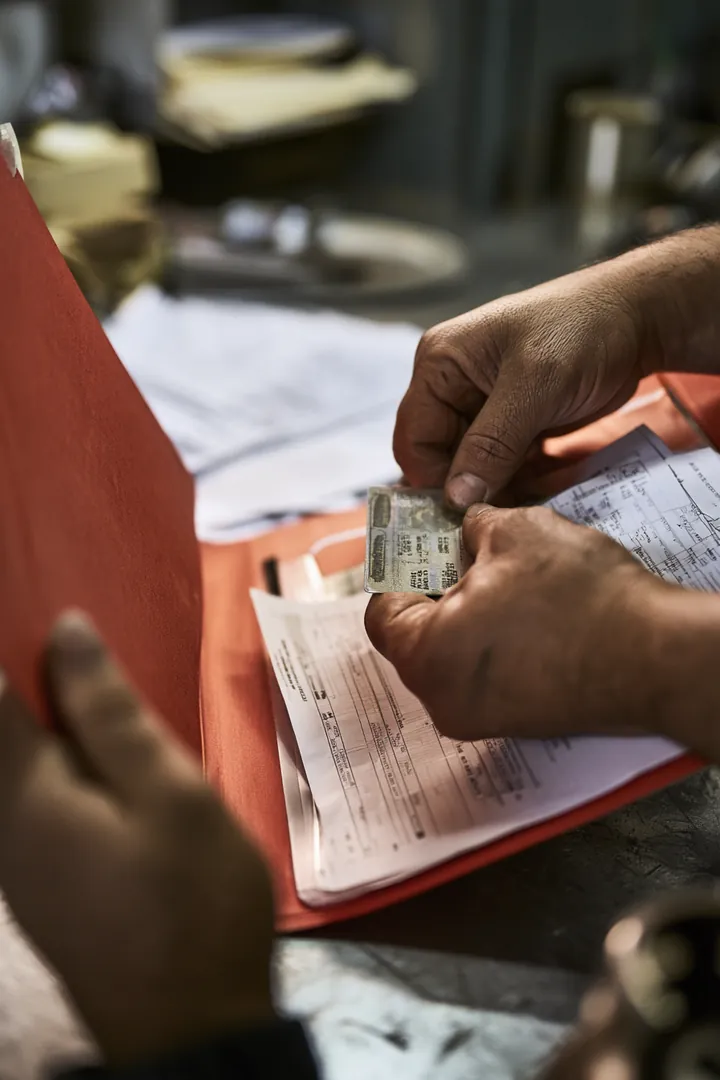
Photograph five things before you start a Benemoney request and verification usually finishes the same day: government ID, your two most recent pay stubs or benefits letter, a utility bill or lease matching your address, your bank routing and account numbers, and — self-employed only — recent bank statements.
- Government photo ID — driver’s license, state ID, or passport; unexpired, matching your application name exactly.
- Income proof — two recent pay stubs, a current benefits award letter, or 2–3 months of statements for self-employment.
- Address proof — a recent utility bill or lease; only some lenders ask, but the photo costs nothing.
- Bank details — routing and account numbers, typed carefully; the most common typo in the entire process lives here.
- Contact access — a phone and email you can check during business hours, because verification questions expire quickly.
The Benemoney theme is friction removal. Every document above exists in your life already; the only question is whether it surfaces in two minutes or two days. Benemoney borrowers who prepare the folder first consistently describe verification as a non-event — and the same-day funding stories on the review page almost all start with documents that were ready before the request was.
What Actually Disqualifies a Request
The recurring dealbreakers: unverifiable income, a closed or deeply overdrawn bank account, identity details that don’t match documents, active bankruptcy proceedings, and — for some lenders — a very recent default on a similar personal loan.
Note what the personal loan decline list is made of: verifiable facts, not judgments. Lenders rarely decline because they dislike a file; they decline because a required fact could not be established. That is oddly good news, because facts can be fixed. Cash income becomes verifiable through sixty days of scheduled deposits — the same clean-banking rhythm every bene money page recommends. A troubled account is replaced by a new one that then ages for a month or two. Mismatched details are corrected by reapplying with documents open on the table. Active bankruptcy resolves on its own timeline, after which several network lenders will read the post-discharge file on its current merits. The one dealbreaker with no workaround is misrepresentation — income rounded up, obligations left off. Underwriting cross-checks, the gap surfaces, and a fixable personal loan decline becomes a fraud flag. Every number on a bene money request should survive a comparison with your own bank statement, because that comparison is exactly what happens next.
Improving Benemoney Eligibility in 30 / 60 / 90 Days
Declined or priced badly? The 30-day fix is documentation and details; the 60-day fix is clean banking; the 90-day fix is visible credit repair — and all three compound.
30 days: rebuild the bene money request itself — documents photographed, address unified, income entered exactly as deposits show it, and the amount resized so the payment obviously fits (a smaller request or longer term often flips a decline, as the $2,000 guide’s underwriting section shows). 60 days: run the clean-banking protocol that income-first personal loan underwriting rewards — scheduled deposits, zero overdrafts, a small standing buffer. This is the highest-yield period for income-first eligibility. 90 days: let personal loan credit facts update — utilization paid down, a disputed error removed, three months of on-time everything; the habits guide sequences the levers. Then request again through Benemoney: the network re-reads the file as it is now, not as it was, and files genuinely do move between tiers in a quarter. Personal loan eligibility is a snapshot, never a verdict.
State Variations Worth Knowing
Eligibility basics are national, but three details vary by state: the contract age (19 in a couple of states), which lenders hold licenses there, and the personal loan amounts and rates those licenses permit.
State licensing shapes your options invisibly. When a Benemoney request goes out, only lenders licensed for your state can respond — which means two neighbors across a state line submitting identical files see different offer sets, different personal loan ceilings, and different price bands, all lawfully. A few states restrict specific small-loan structures entirely; others permit them with caps. None of this requires action from you beyond entering your state accurately — the network handles the mapping — but it explains two experiences that otherwise confuse applicants: why a personal loan lender advertised nationally “isn’t available in your state,” and why your cousin’s glowing recommendation cannot respond to your bene money request. Neither is a reflection on your file; both are the map, as the Benemoney rates guide’s state-law section explains from the pricing side.
Eligibility Myths That Stop Good Applicants
The myths that keep qualified people from applying: that a past bankruptcy is permanent disqualification (it isn’t), that benefits income doesn’t count (it does), that checking options hurts your score (soft inquiry — it doesn’t), and that a decline anywhere means declines everywhere (underwriting models disagree constantly).
Each myth costs real people real options. Discharged bankruptcy files qualify for personal loans at several network lenders once the discharge is final and banking has stabilized — the file is read as it stands today. Social Security and disability income are ordinary verifiable income across most of the personal loan industry, full stop. The soft-inquiry structure of the initial Benemoney request exists precisely so that finding out costs nothing — the hard inquiry belongs only to the offer you accept. And the decline-everywhere myth inverts how this market works: lenders’ models weight the same facts differently, which is why one request reaching many desks is the whole design. The Benemoney applicant who assumes the answer is no has replaced every lender’s underwriting with their own — and theirs is the only model guaranteed to decline. If the four basics at the top of this page describe you, the honest bene money answer is: probably eligible somewhere in the network, at a price a real offer will state.
Keep Reading
The rates guide explains what happens after eligibility — how the qualified file gets priced. The personal loans overview holds the product basics, the How It Works page walks the process end to end, and the FAQ answers the eligibility questions this page’s comments raise most. When the checklist above is photographed and ready, the Benemoney request form turns preparation into offers.
Quick questions
Can I qualify on benefits income alone?
Often, yes. Social Security, disability, and pension income count as verifiable regular income with most Benemoney network lenders — bring the award letter or bank statements showing the deposits.
Do I need a credit score minimum to apply?
No minimum is required to submit a request. Lenders each set their own thresholds, and several in the network approve primarily on income and banking history. The request itself is a soft inquiry either way.
Why was my request declined when I meet the basics?
The usual culprits: income that couldn't be verified, a checking account with recent overdrafts, details that didn't match documents, or capacity — the payment didn't visibly fit your monthly flow. Fix the specific issue and reapply in 30–60 days.
Can I apply with a joint bank account?
Generally yes, if you're an account holder. The account must be active, in good standing, and able to receive ACH deposits — the lender will verify your name is on it.
Does being self-employed disqualify me?
No — it changes the paperwork. Expect to show 2–3 months of bank statements instead of pay stubs, and to explain irregular deposit rhythm. Steady total monthly income matters more than a traditional employer.